


Nvidia's Next Growth Market Isn't the Data Center It's the Factory Floor

Nvidia's latest AI announcement wasn't about building bigger data centers. It was about bringing artificial intelligence into factories, warehouses and industrial operations, signalling that the next phase of AI growth could be driven by the physical economy rather than the digital one.
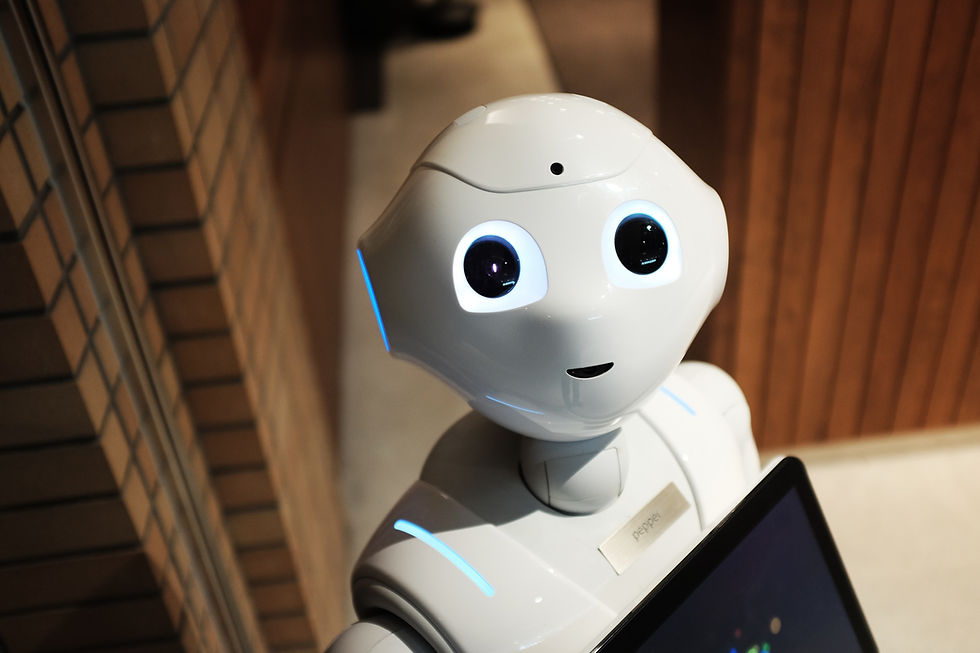
For the past three years, the AI race has largely been fought inside data centers.
Technology giants have spent hundreds of billions of dollars building the computing infrastructure needed to train ever more powerful AI models, while companies like Nvidia have become some of the biggest beneficiaries of that investment boom.
Now, Nvidia believes the next chapter will play out somewhere very different: on the factory floor.
At an AI event in Tokyo, the company unveiled a new foundation model designed for "physical AI" and announced a major expansion of partnerships with Japanese manufacturers, robotics companies and technology firms. The goal is to bring AI beyond screens and into the machines that build products, move goods and power industries.
Unlike the generative AI tools that write emails or create images, physical AI is designed to understand and interact with the real world. It can help robots navigate factory floors, improve warehouse logistics, assist autonomous machines and optimise manufacturing processes in ways that were previously impossible.
For investors, the announcement represents more than another product launch.
It offers a glimpse into where Nvidia believes its next wave of growth could come from.
The company has built its recent success by supplying the GPUs that power AI data centers. But if AI becomes embedded in factories, logistics networks, transportation systems and industrial equipment, the addressable market for AI hardware and software expands dramatically.
In other words, Nvidia isn't just betting on smarter chatbots. It's betting that AI will become part of the global industrial economy.
Japan is a natural place to begin that transition.
Home to some of the world's most advanced robotics and manufacturing companies, the country has spent decades leading industrial automation. Nvidia's latest partnerships aim to add a new layer of intelligence to that existing ecosystem, enabling machines to analyse their surroundings, adapt to changing conditions and work more efficiently alongside people.
That last point is perhaps the most important.
Discussions around AI often focus on replacing workers, but the more immediate opportunity may be making workers more productive.
In many industrial settings, the greatest value comes from automating repetitive, time-consuming or hazardous tasks while people continue to provide the judgement, creativity and oversight that machines cannot. Engineers still need to solve complex problems, technicians still maintain critical equipment, and operators still make the decisions that keep production running safely and efficiently.
Rather than removing people from the workplace, physical AI has the potential to become another tool that helps skilled workers do their jobs more effectively.
That distinction matters because it broadens the investment case.
Companies adopting AI are no longer looking solely at reducing costs. They're increasingly focused on improving productivity, addressing skilled labour shortages and increasing output without compromising quality or safety. Businesses that successfully combine AI with human expertise could gain a meaningful competitive advantage in the years ahead.
For investors, Nvidia's announcement also signals that the AI story is beginning to evolve.
The first phase of the AI boom was about building the infrastructure. The next phase may be about putting that infrastructure to work in the real world.
If that vision becomes reality, tomorrow's AI winners may not just be the companies building larger data centers. They could also include manufacturers, robotics firms, industrial software developers and automation specialists that help bring AI from the cloud to the factory floor.
For Nvidia, that could mean its biggest opportunity is no longer confined to powering the digital economy. It may lie in helping transform the physical one.


Comments